
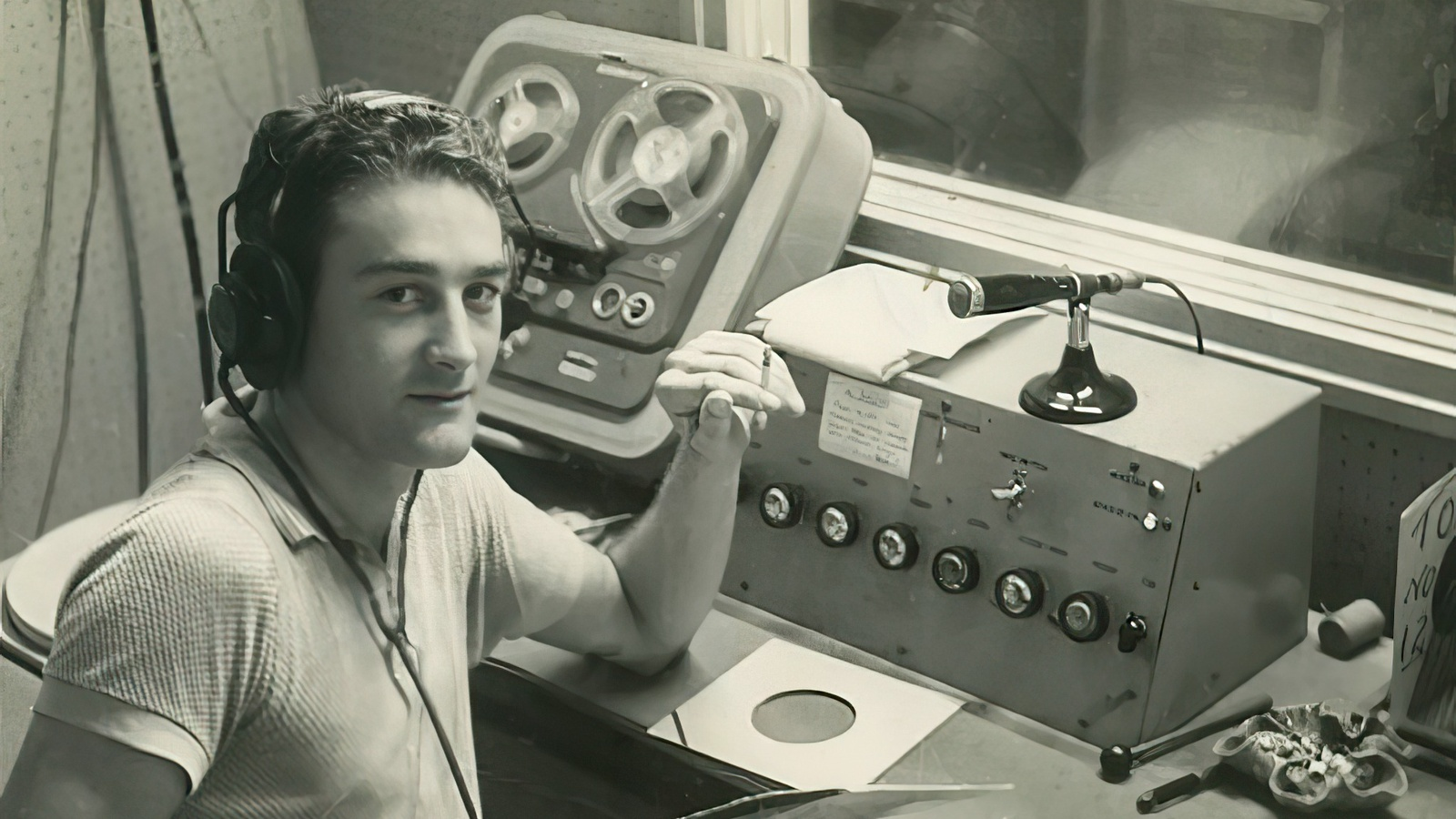
Some people sing country music. Some play it on the radio. Some fight for it when others overlook it.
Gene Bradley Fisk did all three.
Across more than seven decades of music, broadcasting, performance and storytelling, Gene carved out a life that ran through country stages, radio studios, RAAF service, newspaper columns, family history and a deep love of Australian song.
Much of Gene’s story has been preserved through the care of his daughter, Donna Fisk, who has gathered photos, clippings, recordings, letters and memories from his long life in music, radio and service.
He has been described as a singer, songwriter, recording artist, actor, journalist, radio personality, mentor and country music champion. But perhaps the simplest way to describe Gene Bradley Fisk is this:
He was a man who believed country music mattered.
And he spent a lifetime proving it.
A Life Intertwined With Music
Gene Bradley Fisk’s story stretches across more than 70 years of creating music.
From humble beginnings to digital streams, his life has followed the changing shape of sound itself — vinyl, reel-to-reel, cassettes, CDs, radio, podcasts, YouTube and online music platforms. Through it all, the heart of it remained the same: a song, a story, and someone willing to listen.
Family notes describe Gene’s journey as one of persistence, curiosity and lived experience. It is a fitting description for a man whose work has touched music, broadcasting and storytelling across generations.
In his 90th year, Gene was still creating, still promoting country music, and still connected to the artists and listeners who made it matter.
From Colac to the Country Stage
Gene’s music life began early.
Raised around the sounds and stories of country life, he joined the Colac banjo club at the age of 11. That early start became the beginning of a lifelong relationship with music.
Over the years, Gene performed in many bands and musical outfits, from early rock and roll groups through to country bands and outlaw country projects. His musical path included names such as The Sidewinders, The Strangers, The Voodoos, The Huntsmen, Burke & Wills, Sanfisko, Fiskomania, The Gene Fisk Band, Riff Raff, Tiga Trio and Gene Bradley Fisk & The Outlaws.

That long list tells its own story. Gene was not a man standing still. He moved with the times, followed the music, and helped create opportunities wherever he went.
By the late 1970s, Gene had found what seemed to be his natural home in country music.. The sound suited him. The stories suited him. The people suited him.
And the outlaw spirit suited him most of all.
Service, Flight and the RAAF
Before many people knew Gene through country music or radio, he had already served his country.
Gene gave 15 years of service in the Royal Australian Air Force, beginning as an apprentice. During his service, including time connected with Thailand and Malaysia, music and broadcasting began to take on a larger place in his life.

While serving in Malaysia, Gene became involved with Radio RAAF Butterworth. Donna’s archive describes him hosting a “Good Morning Vietnam” style show — aimed at the troops, but also listened to by teenagers in Penang.
That blend of service, music and broadcasting became one of the defining threads of Gene’s life.

It was also during this period that Gene’s interviewing instincts began to take shape. With a microphone and tape recorder in hand, he found his way backstage where international acts such as Cliff Richard and The Shadows were performing.
In many ways, the airwaves became Gene’s second stage.
The Strangers and the Malayan Music Years
Gene’s time in Malaysia also led to one of the more remarkable chapters in his music life.
Family records describe Gene as forming what was believed to be the first rock and roll band in Malaya, The Strangers. The group included two English servicemen and a 16-year-old Malaysian drummer.
The Strangers became popular in Malaya, performing for major occasions and audiences, including events connected to the President of Malaya and the Miss Malaya pageant.
That chapter alone would make a good story.
But for Gene, it was only one stop along the road.
Behind the Microphone
Radio was never just a hobby for Gene Bradley Fisk.
As Donna put it, radio was a vocation.
After returning to Australia, Gene continued building a life across both music and broadcasting. He worked in commercial radio, became a DJ and programme manager, and helped shape country music programming in Australia.
His radio story includes Radio RAAF Butterworth, Melbourne’s 3UZ, 3GL, Country FM in Geelong, and later the long-running Oz Country radio show.
The radio studio suited Gene because it allowed him to do more than play songs. He could introduce artists, support new releases, interview performers, argue for country music and connect listeners to voices they may otherwise never have heard.
In 1979, John Williamson wrote to Gene at Radio Station 3UZ, thanking him for the support he had given his career and for playing tracks from Road To Town. It is a small piece of paper, but a powerful reminder of the role radio people played in helping Australian artists reach an audience.

Gene was part of that world — not just as a broadcaster, but as a believer.
Defending Country Music
One of the strongest parts of Gene’s archive is not a photo, not an album cover, and not a stage shot.
It is a newspaper column.
In 1988, Gene Bradley Fisk wrote a country music column in the Geelong Advertiser. One headline says plenty:
Defending Country Music

In that column, Gene pushed back against the idea that country music was somehow lesser than other forms of music. He argued for Australian country artists, for proper airplay, and for respect.
That matters.
Because Gene was not just performing country music when it suited him. He was defending it when it needed defending.
He understood what many country people have always known: country music is not just a sound. It is memory, place, humour, hardship, loyalty, distance, work, love and loss.
It is ordinary people turned into song.
Gene knew that. And he said so.
The Friendly Outlaw
Gene’s love of country music found one of its strongest expressions in the outlaw country sound.
He was drawn to artists and attitudes that pushed against the polished edges of the industry. The music had grit. It had character. It had something lived in.
In an old article titled From The Outlaw, Gene wrote about country music, Tamworth, airplay, Victorian radio, and the hard road of trying to promote country releases. His words carried humour, frustration and stubborn affection for the music and its people.

At the side of that article was a line that could almost stand as a mission statement:
“My main concern now is staying with the promotion of our music; and that means singing it, recording it, writing about it, and broadcasting it.”
That is Gene Bradley Fisk in one sentence.
Singer. Broadcaster. Writer. Promoter. Defender.
Gene Bradley Fisk & The Outlaws
Among the many musical projects across Gene’s career, Gene Bradley Fisk & The Outlaws stands out as a favourite chapter.
The band gave Gene a vehicle for the country sound he loved, and it also allowed him to support younger talent. Donna’s archive notes that Gene recruited a rising 16-year-old guitarist, Andrew Coyle, who later went on to success with Indecent Obsession.

That mentoring side of Gene’s story matters too.
Country music has always moved from one hand to another. One singer opens a door. One radio host plays a track. One older musician gives a younger player a chance.
Gene was part of that chain.
On Stage, On Air, On the Page
Gene’s career was never limited to one lane.
He performed live. He recorded music. He worked in radio. He interviewed artists. He wrote columns. He appeared on stage. He promoted new releases. He preserved old sounds. He chased new technology. He kept learning.
In 1994, at the age of 60, Gene made his debut as an actor in a leading role in the play A Perfect Madness at Carlton Courthouse Theatre in Melbourne. He played Gordon O’Connor, an old-time carnival worker and country singer.
It seems fitting.
By then, Gene had already lived enough stories to understand the character.
Oz Country and the Final Sign-Off
In his later years, Gene began another remarkable chapter with Oz Country.
The program became a way for him to keep promoting Australian and New Zealand country music well into his 80s and 90s. It was not something he treated casually.
Donna’s farewell note says Gene began Oz Country around the age of 80 and continued for 573 episodes.
At nearly 91, he finally decided it was time to hang up the headphones and pull the fader down on the microphone.

There is something deeply Australian in the way Donna described it:
No fuss. No hoo-ha. No grand final show.
Just Gene saying, in effect, that he had loved every minute of it.
Even near the end of that broadcasting run, the work ethic remained. Christmas, Easter, special occasions — nothing came before preparing the show. There was artist research, nerves before the microphone went live, and the same old desire to do the job properly.
Donna wrote that Gene joked he did not want to “drop dead on air”.
That line says a lot. Humour, timing, self-awareness, and the broadcaster’s instinct to leave the microphone clean.
Donna shared the following farewell note when Gene wrapped up Oz Country, thanking the radio and music people who had supported him along the way.
Underneath My Setting Sun
In 2025, Gene released Underneath My Setting Sun, a reflective late-life song described in his press release as a ballad about life, love, regret, self-discovery and the pursuit of peace.
For a man who had spent a lifetime around songs, the title alone feels fitting.
The sun may have been lower in the sky, but the music was still there.
A Family Legacy
This feature would not exist without Donna’s care in gathering, preserving and sharing Gene’s archive.

Behind every archive like this is someone who cares enough to preserve it.
She has gathered photos, clippings, letters, recordings, videos and memories into a growing family portal. It is the kind of work that often happens quietly, but it matters enormously.
Because without someone keeping the stories, they disappear.
And Gene Bradley Fisk’s story deserves to be kept.
Not just because he sang songs.
Not just because he worked in radio.
Not just because he served in the RAAF.
But because across all of it, he carried something forward — a belief that Australian country music, and the people who make it, are worth listening to.
Listen and Watch
You can explore more of Gene Bradley Fisk’s music, memories and archive through his YouTube channel
Preserving Gene Bradley Fisk’s Story
Country Campfire exists to preserve, celebrate and share Australian country culture.
This feature was prepared with material and photographs shared by Donna Fisk from the Gene Bradley Fisk family archive. Newspaper clippings, letters and images remain credited to their original creators and publications where known.
Gene Bradley Fisk’s life belongs here.
A musician. A broadcaster. A RAAF serviceman. A columnist. A performer. A father. A grandfather. A country music defender.
Gene Bradley Fisk carried country through the airwaves for a lifetime.
And thanks to Donna’s care in preserving it, that voice still has a place around the campfire.
