
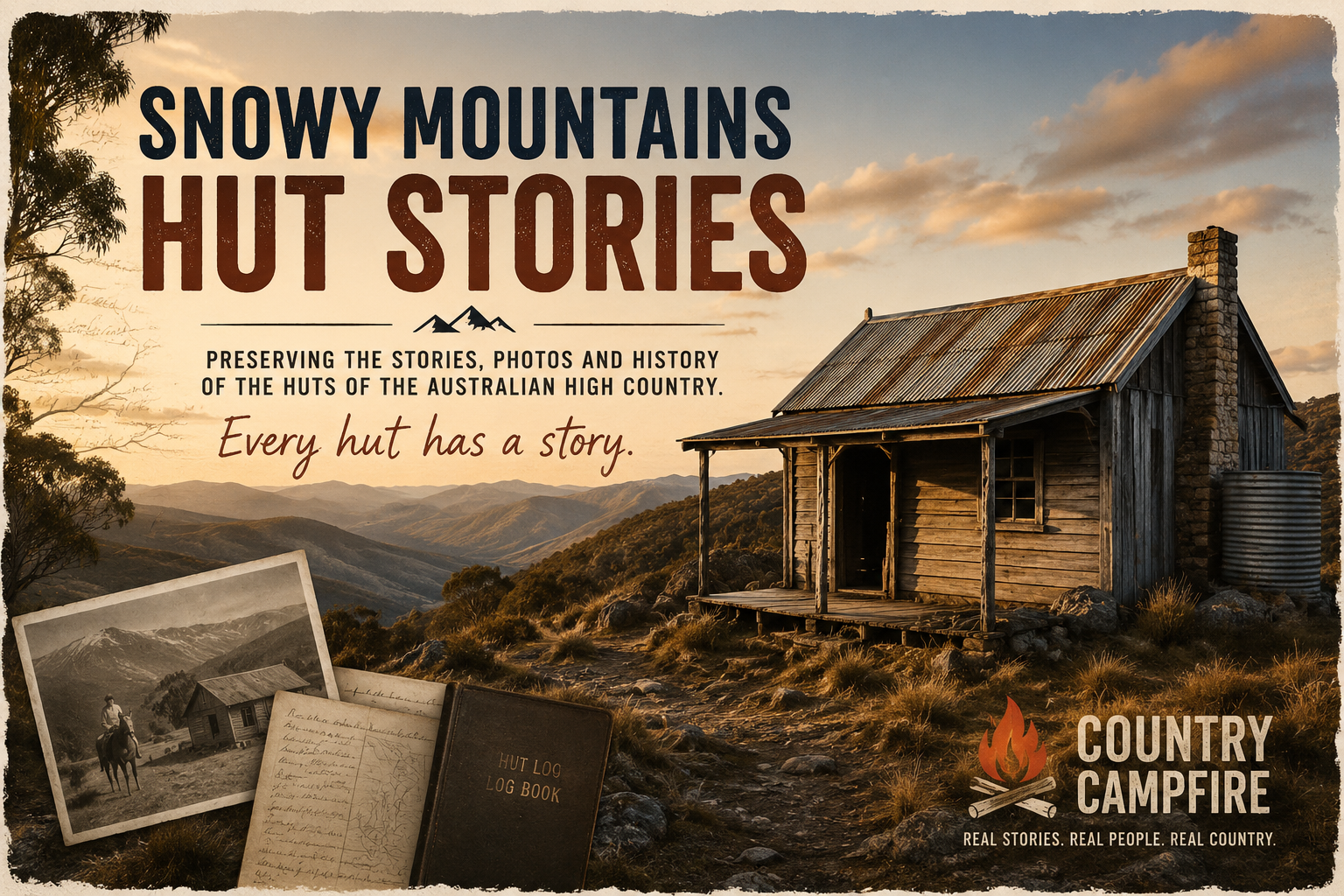
Preserving the stories, photos and history of the huts of the Australian high country.
Scattered across the Snowy Mountains are huts built from timber, tin, stone, sweat and necessity.
Some were used by stockmen moving cattle through the high country. Some were connected to grazing families, prospectors, fishermen, skiers, bushwalkers, Snowy Scheme workers and mountain travellers. Some became shelter in storms. Some survived fire. Some were lost. Some were rebuilt by volunteers who understood that these places were worth saving.
But the huts themselves are only part of the story.
Behind every hut there are people.
There are family photos tucked away in old albums. There are stories told around kitchen tables. There are memories of walking in, riding in, camping nearby, finding shelter, helping with restoration, or hearing about a grandfather, grandmother, uncle, neighbour or old mountain character who once knew the place well.
Country Campfire exists to help preserve Australian country culture before it disappears.
That started with bush poetry, country music, rural stories and the Country Campfire Legends Project — preserving the stories of people who have helped shape our country culture in their own quiet way.
But some places become legends too.
The huts of the Snowy Mountains are part of that story.
Why This Project Has Started
This project began with a simple question posted in the Facebook group Roof Of Australia History Huts Mountain Trails:
“Who here has a story about one of the Snowy Mountains huts?”
The question was simple, but the idea behind it quickly grew.
People mentioned old photos, family history, hut pages, Google resources and important books such as Huts of the High Country by Klaus Hueneke.
One comment mentioned a photo from 1934 and a story connected to a lady bushwalking through the park, staying at huts and with stockmen along the way.
That is exactly the kind of history that can so easily disappear if nobody takes the time to preserve it.
Not every story is sitting in a museum.
Some are sitting in drawers.
Some are in old photo albums.
Some are in the memory of someone who is not on the internet much.
Some have only ever been told out loud.
The Snowy Mountains Hut Stories Project is about giving those stories a home.
What We Are Hoping To Preserve
This project is not trying to replace official history, heritage groups or the incredible work already done by people who have researched, protected, restored and maintained the huts over many years.
This is a storytelling project.
Country Campfire wants to help collect and share the human side of the huts.
That may include:
Old photographs.
Family stories.
Memories from stockmen, graziers and mountain families.
Stories connected to cattle grazing and high country life.
Bushwalking and skiing memories.
Snowstorm and survival stories.
Hut restoration stories.
Bushfire stories.
Stories from volunteers who helped rebuild or maintain huts.
Poems, yarns and reflections connected to the Snowy Mountains.
Interviews with people connected to the huts.
Historical leads, documents and resources that help tell the story properly.
Some articles may focus on one hut.
Some may focus on one photograph.
Some may focus on one family.
Some may simply preserve a memory before it is lost.
Every Hut Has A Story
A hut can look simple from the outside.
A few walls. A roof. A fireplace. A door that has been opened and closed by people passing through harsh country.
But when you stop and think about who stood there before you, the whole place changes.
Someone may have ridden in after a long day moving cattle.
Someone may have arrived wet, cold and grateful to find shelter.
Someone may have sat by the fire waiting for weather to clear.
Someone may have written in a hut logbook, not knowing that years later those words would mean something to someone else.
Someone may have helped rebuild that hut after fire or decay because they knew it mattered.
These places are not just relics.
They are part of the living memory of the Snowy Mountains.
A Country Campfire Archive
Country Campfire is based in the Snowy Mountains region, and this project is close to home.
The long-term goal is to build a digital archive of Australian country culture — not just the famous names, but the stories, places and people that shaped the bush, the mountains and the communities around them.
The Snowy Mountains Hut Stories Project will grow slowly.
It does not need to be completed all at once.
It will begin with the stories people are willing to share.
One photo.
One memory.
One hut.
One family connection.
One yarn at a time.
Over time, the hope is that this becomes a useful and meaningful collection for locals, families, bushwalkers, horsemen, historians, hut volunteers, country people and anyone who cares about the Australian high country.
Do You Have A Snowy Mountains Hut Story?
If you have a story connected to one of the Snowy Mountains huts, I would love to hear from you.
It does not need to be perfectly written.
It does not need to be polished.
It might be an old photo, a rough memory, a family connection, a story passed down, or simply a lead that points in the right direction.
You might know something about:
A hut your family used.
A photo taken near a hut.
A stockman, grazier or mountain worker connected to a hut.
A restoration project.
A hut lost or damaged by bushfire.
A survival story.
A favourite hut memory.
A poem or written piece connected to the high country.
Even small details matter.
Sometimes one old photo or one half-remembered story is the beginning of something much bigger.
If you have something to share, please contact Alex at:
Together, we might be able to preserve a little more of the Snowy Mountains story before it disappears.
